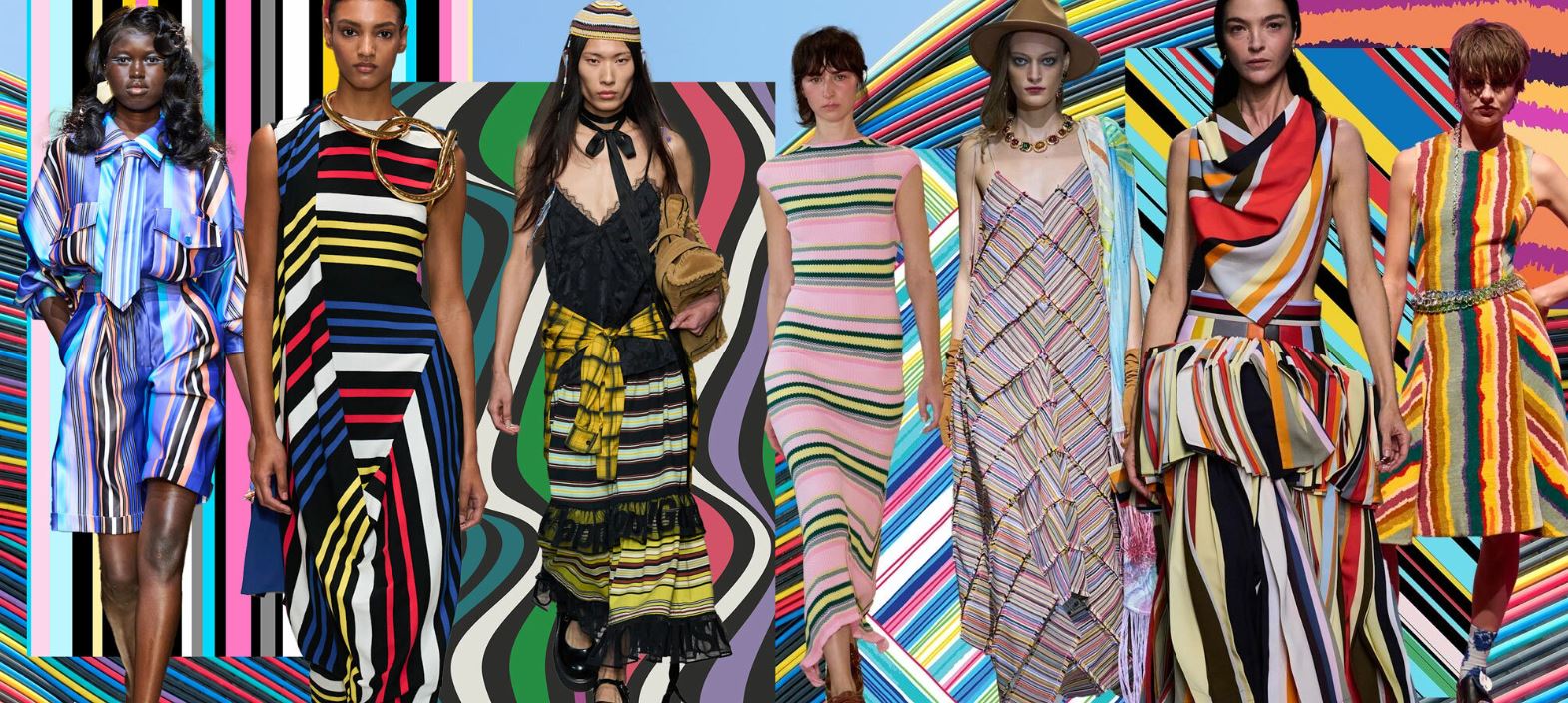
Often dismissed as charmingly kitsch, the nautical style holds a revered place in fashion history. Its roots trace back to military uniformity—rich with symbolism, structure, and design intention. Designers have long been drawn to uniforms not only for their formality and precision but also for the opportunity they present: a structured canvas begging for reinvention.
Few garments possess the quiet authority of the striped sailor shirt. Originally worn by French naval seamen in the 19th century, the bold blue-and-white stripes were not just for style; they served an important purpose: to help spot men lost at sea. Each shirt featured exactly 21 stripes, a number believed to commemorate Napoleon’s naval triumphs. By 1858, this utilitarian knit had become standard issue in the French Navy. Today, we know it as the Breton shirt—an icon that has long since sailed beyond its military origins into fashion history.
It wasn’t until decades later that this utilitarian piece leaped in fashion. Gabrielle “Coco” Chanel is often credited with giving the Breton shirt a stylish new purpose. In 1912, she opened her Deauville boutique, drawing inspiration from the relaxed, athletic ease of seaside dressing. Sailor trousers and striped knits weren’t just novel—they were liberating. These pieces embodied the comfortable elegance and functional beauty that became core to Chanel’s aesthetic. Over time, she transformed maritime uniform into an emblem of modernity and laid the foundation for what we now consider classic French chic.
Long after Chanel brought the sailor stripe into the fashion spotlight, Jean Paul Gaultier made it unmistakably his own. For him, the Breton shirt wasn’t just a garment—it was personal history. As a child, he’d worn those stripes often, and by the early ’80s, that early connection evolved into a signature look. What began as nostalgia became a bold act of self-styling, turning a piece of naval tradition into something entirely subversive and unmistakably Gaultier. He wore the classic navy-and-white stripes everywhere, pairing them with unexpected elements—even tuxedos on formal evenings.
In 1983, Gaultier’s affection for the marinière took center stage in his L’Homme Objet menswear collection. Drawing inspiration from Fassbinder’s provocative film Querelle, he reinterpreted the once-functional naval garment into something sensual and rebellious. Models strutted the runway in cropped, backless, and body-conscious versions of the sailor shirt—redefining masculinity and uniformity with erotic flair.
By the 1990s, the striped motif was so deeply woven into Gaultier’s brand identity that it found its way onto the bottle of his now-iconic fragrance, Le Male. Cast in the form of a sculpted male torso wearing sailor stripes, the fragrance cemented the marinière as more than a style choice—it became a symbol. When a visual code becomes the face of a best-selling fragrance, it’s no longer just fashion; it’s forever.
Fast forward to SS 2025, and stripes are having a major moment—but not in the way you might expect. Far from traditional, designers are shaking things up with bold palettes and unexpected pairings. At Zankov and Charles Jeffrey, saturated clashing tones turn classic lines into works of art. Max Mara and Prada lean into graphic energy, proving that stripes can be just as playful as they are polished. At Proenza Schouler it was an insouciance ease that was at once Upper East Side and downtown cool.
Swimwear is also getting the striped treatment, splashed in high-impact colorways that practically demand sunshine. At Louis Vuitton, the retro spirit is alive and well with ‘80s-inspired puff-sleeve jackets—proof that a bit of nostalgia never goes out of style.
“
Finding your own style is not easy, but once found it brings complete happiness. It give you self-confidence, always - Yves Saint Laurent